
Dec. 15, 2025 Article
 Dr. Christy da Rosa, MSW, LICSW, PhD, Trauma Informed Oregon
My Ph.D. journey began on a smoky i-5, somewhere between what I was leaving behind and what I could not yet imagine. I had been working in Bremerton, WA as a clinical social worker with wildfire survivors who had fled from Paradise, CA after the 2018 Camp Fire that led to the deaths of 85 people. Their wisdom of loss, of love, of rebuilding, were still tucked into my mind as we packed up our lives and drove south.
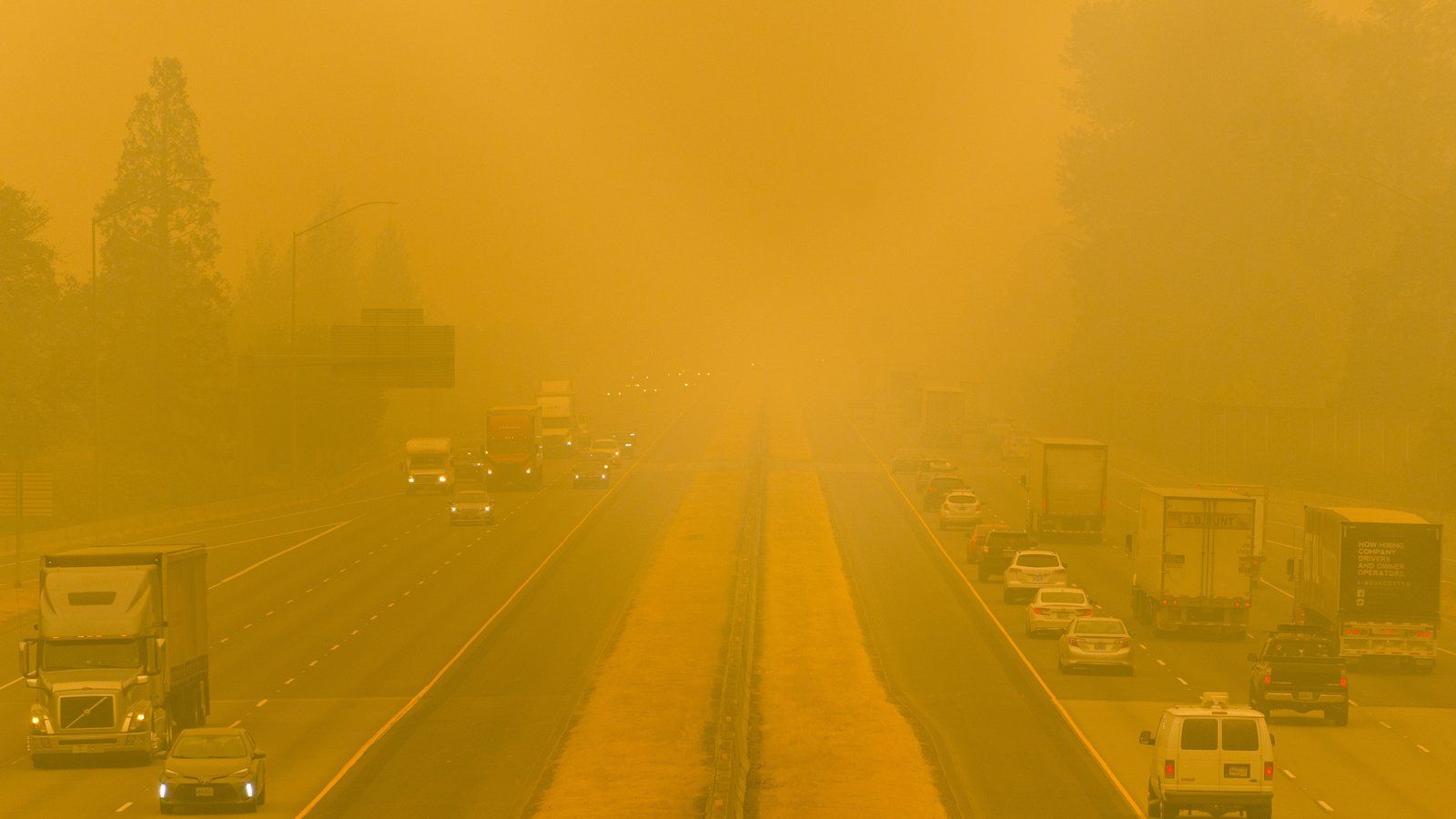
As we made our way into southern WA, the air thickened. Smoke curled around the car, and it became harder to see the trees around me. The sky burned a deep orange behind dark clouds. With every mile, I questioned whether I was moving toward the right future or into the heart of a mistake. When we arrived, the apartment manager wasn’t there. She was helping her family evacuate. So we stayed in a hotel filled with people who had just fled the Labor Day Fires.
Looking back, that first night was an invitation. A reminder that research is never just research; it is relationship, responsibility, and reverence of lived experience and a call for action.
I entered my Ph.D. program planning to study environmental trauma caused by fossil fuel corporations and the mental health impacts of climate change. But early on, my advisor, now my director, nudged me toward evaluating a new program born from the Labor Day Fires: the Disaster Resilience Learning Collaborative. What I thought would be a side project became the center of my learning. It showed me that trauma in climate justice work is cultural, ancestral, historical, and woven into our systems. And it showed me that the people closest to the ashes, both literally and metaphorically, hold the deepest wisdom.
Through my dissertation, I had the profound honor of working alongside so many of you, our community leaders, cultural practitioners, storytellers, healers. My work focuses on how culturally rooted community-based organizations navigate landscapes layered with trauma at every level (e.g., acute, individual, historical, systemic) by drawing on cultural restoration, survivance, and a fierce, abiding love for their communities. You are cultural brokers, translators, protectors. You move between institutionalized subjugation and rooted community with grace forged through generations.
This dissertation exists because you shared your truths, your wit, your spirituality, your strategies, and your love. I am deeply, forever grateful.
Below is the abstract for my dissertation. In light of the federal administration’s ongoing targeting of our communities through academic pathways, this work has been made more confidential; the fire and towns at the heart of this research are unnamed to protect the CBOs and individuals who entrusted me with their stories. Some of you will recognize yourselves and the places here.
If you have questions, reflections, or simply want to continue the conversation, please reach out. This work belongs to you as much as it belongs to me. It is my hope that it honors the strength, beauty, and brilliance you carry. My email is [email protected]
Abstract
As wildfires increase in frequency and severity in rural communities, disaster management agencies are seeking to collaborate with community-based organizations (CBOs) working with rural, low-income Latin@/e/x communities to build wildfire resilience. This qualitative case study examines the critical role of CBOs rooted in their local, predominately low-income Latin@/e/x communities as cultural brokers in supporting Latin@/e/x wildfire survivors following the 2020 “Mobile Home Parks” Fire in a rural county in Oregon. Drawing from 23 semi-structured interviews, three focus groups, a review of relevant documents, and participant observations, the research investigates how Latin@/e/x CBOs navigated the complex cultural landscape between wildfire survivors and traditional disaster recovery frameworks. Namely, this research aims to address the following research questions: To what extent, and how, do Latin@/e/x CBOs leverage culturally rooted knowledge within the communities they work with to create opportunities for collective healing? What challenges do Latin@/e/x CBOs face in integrating culturally rooted knowledge into disaster resilience programs for low-income, rural Latin@/e/x communities? What opportunities exist for mutual learning and collaboration between diverse, local community practices and state disaster resilience frameworks? This case study examines how institutionalized disaster recovery systems, designed for administrative efficiency, often overlook the cultural realities of Latin@/e/x wildfire survivors.
The research reveals significant challenges in wildfire recovery for Latin@/e/x communities, including linguistic barriers, resource scarcity, systemic trauma, and cultural disconnection. When disaster recovery frameworks clash with local culture, those with the least institutional power bear the greatest risk. The findings reveal how standardized approaches can unintentionally reproduce systemic vulnerabilities rather than support transformational, culturally rooted resilience. Effective cultural brokering between conventional disaster management agencies and Latin@/e/x wildfire-impacted communities requires institutional commitment to long-term leadership development, the cultivation of institutional humility, sustained relationship-building before and after disasters, meaningful policy reforms, and robust accountability mechanisms. This study proposes an expanded conceptualization of cultural brokering at an organizational level for understanding how cultural brokering can operate as a multidirectional process with transformative potential. It differentiates between two distinct approaches: one-way and multi-way cultural brokering. One-way cultural brokering refers to cultural translation in one direction, aiming to focus on improving access to existing conventional disaster recovery systems and helping Latin@/e/x wildfire survivors navigate institutional processes through linguistic interventions, case management, and culturally rooted outreach strategies. Multi-way cultural brokering refers to a circular cultural translation direction where communities are able to create new disaster recovery paths rooted in local wildfire survivor culture in partnership with conventional disaster recovery allies. This approach improves safety and roots in core community challenges to recovery because it offers a transformative approach that centers community priorities, lived experiences, and cultural resources. By positioning local cultural knowledge as essential rather than supplemental to conventional approaches to wildfire recovery programming, these organizations have developed innovative pathways for grief, healing, and transformational resilience for their wildfire survivor service recipients. This approach reimagines disaster recovery and resilience programming by recognizing community members as the most crucial recovery resource, establishing culturally rooted and trauma informed healing processes, and developing leadership and political engagement among survivors.
The findings have profound implications for disaster management, highlighting the critical importance of cultural knowledge, community expertise, and relationship-centered collaboration. This study demonstrates that CBOs can leverage their cultural knowledge in ways that improve the services they provide. However, to be able to leverage that cultural knowledge, they and the community members they work with should be redesignated as decision-makers rather than solely service providers or advocates. By positioning Latin@/e/x community members as the primary architects of their own recovery, this approach offers an organizational model for creating more equitable, responsive, and transformative disaster resilience strategies. This shift requires shared governance models where CBOs, government agencies, and funders collectively determine recovery priorities and program implementation. These shared governance models should also reflect a revision of flexible wildfire disaster recovery assessment tools that can better reflect diverse living arrangements, informal housing networks, and cultural understandings of recovery CBOs operate within.